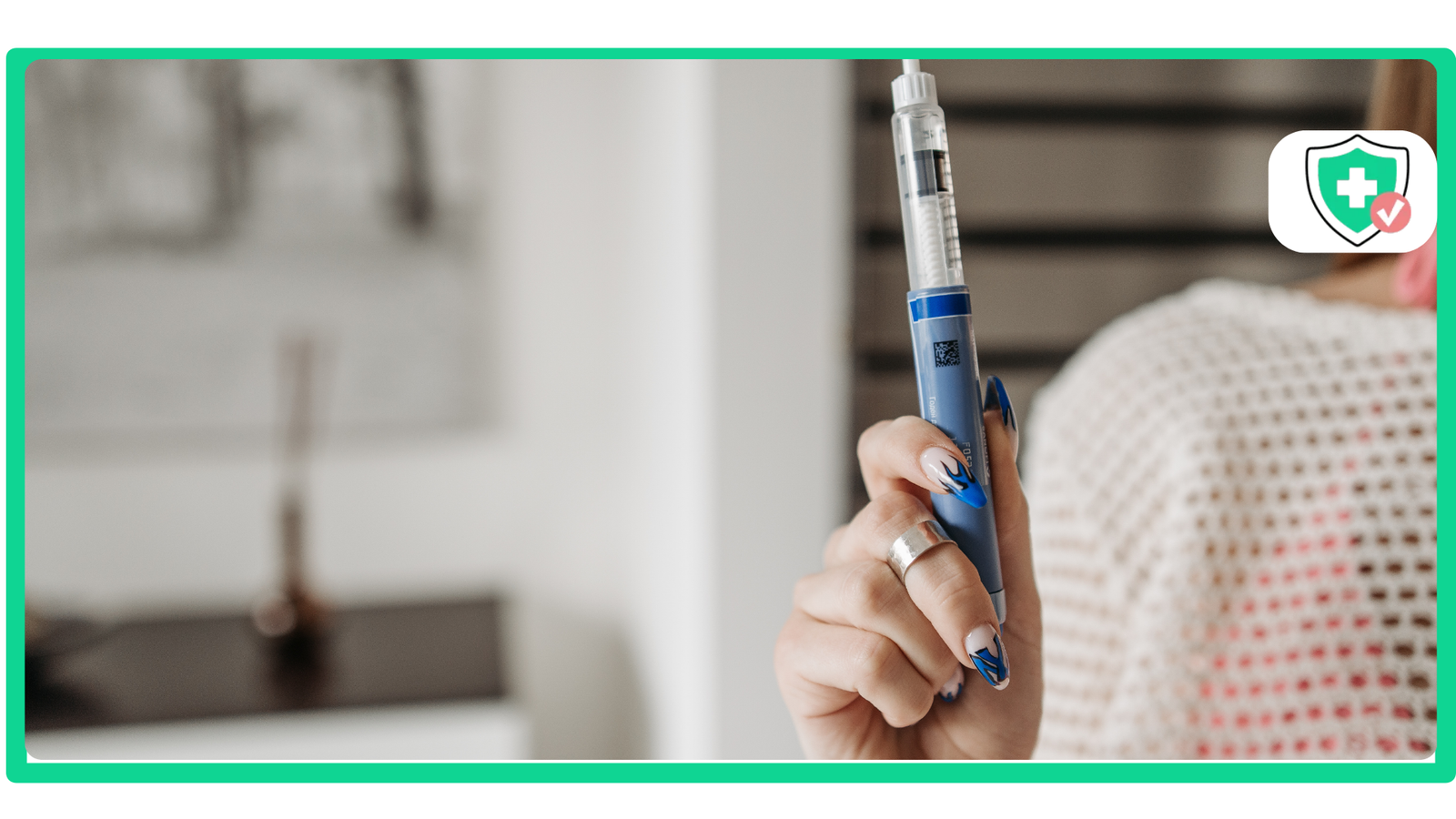


When you start taking a new medication, it’s really smart to be curious. Knowing exactly what you’re putting into your body is an important part of taking charge of your health. If you are looking into this amazing tool for weight loss, you are probably asking, what is in semaglutide? It’s a fantastic question, and the answer is actually pretty simple once you break it down.
Most medicines are made of two kinds of ingredients. There’s the “active” ingredient that does all the work, and then there are the “inactive” ingredients that act as a support team. This guide will explain both parts in a way that’s super easy to follow.
The Star of the Show: The Active Ingredient
Every great movie has a star, and in this medication, the star is the active ingredient. This is the part of the medicine that makes all the magic happen.
Semaglutide: A Synthetic Human Hormone
The main ingredient is a drug called semaglutide. In simple terms, it’s a man-made copy of a hormone that your body already makes naturally. This natural hormone is called GLP-1.
Your gut releases GLP-1 every time you eat. It travels to your brain and sends a message that says, “Hey, we’re getting full down here!” The only problem is that your natural GLP-1 only lasts for a few minutes before it’s gone.
Think of your natural GLP-1 as a key that fits into a lock in your brain to turn off hunger. Semaglutide is like a nearly identical copy of that key, but it’s designed to be stronger and to stay in the lock for much longer, for a whole week! This keeps that “I’m full” signal going strong.
How This One Ingredient Drives Weight Loss
This single, powerful ingredient helps you lose weight in a few different ways. It’s a team effort that happens inside your body.
Here is how it works:
-
It Reduces Your Appetite: The main job of Semaglutide is to talk to the hunger center in your brain. By keeping that “fullness lock” activated, it helps to quiet down the constant thoughts about food, which is sometimes called “food noise.
-
It Slows Down Your Stomach: Semaglutide also tells your stomach to take its time emptying after a meal. When food stays in your stomach a little longer, you feel physically full and satisfied for hours, which helps you eat less.
-
It Helps with Blood Sugar: This medicine also helps your body handle sugar from food more effectively. This prevents the big sugar spikes and crashes that can make you feel tired and crave unhealthy snacks.
This amazing system is why Semaglutide has become such a trusted tool in modern weight management. It’s the entire focus of our dedicated team to bring this tool to you safely.
The Supporting Cast: What Else Is in Semaglutide?
So, besides the star of the show, what is in semaglutide? Just like a movie star has a whole crew helping them, the active ingredient has a supporting cast of inactive ingredients. They don’t cause weight loss, but they each have a very important job to do.
Disodium Phosphate Dihydrate: The pH Balancer
This ingredient might have a long, complicated name, but its job is simple. It’s a type of salt that works as a buffer.
Its main role is to make sure the medicine has the right pH level, which is a measure of how acidic something is. It keeps the liquid balanced so it feels comfortable to your body, kind of like how saline eye drops are balanced so they don’t sting your eyes. This also keeps the active ingredient stable and effective.
Propylene Glycol: The Preservative
Propylene glycol is a very common ingredient that acts as a preservative. You can find it in many foods and medicines.
Think of it as a little security guard for the medicine. Its job is to stop any pesky bacteria or germs from growing in the liquid. This ensures that every single dose you take is pure and safe from the first to the last.
Phenol: Another Safety Guard
Phenol is another super common and safe preservative that works alongside propylene glycol. You can think of it as a second security guard.
Having two preservatives is like having a strong lock and a security alarm on your house. It makes the medicine extra safe and sterile, which is incredibly important for any medication that you inject.
Water for Injection: The Vehicle
This is the simplest ingredient of all! The base of the medication is just very, very clean water.
This isn’t tap water, though. It’s special sterile water that has been purified to remove all germs and particles. It acts as the vehicle that carries the active ingredient and all the other supporting ingredients into your body.
Are the Inactive Ingredients Safe?
It is totally normal to wonder about the safety of these other ingredients. The good news is that the answer is a clear and simple “yes.”
All of these inactive ingredients are approved by the FDA. They have been used safely for many, many years in all sorts of common medications, from flu shots to allergy medicines.
They are also only present in extremely tiny amounts. Their only purpose is to protect the active ingredient, Semaglutide, and make sure it works perfectly and safely for you. If you have concerns about any specific ingredient due to allergies, you should always contact a healthcare provider.
Quality, Safety, and Our Commitment to You
Understanding what’s in your medication is a huge part of a safe and effective treatment plan. At Semaglutide Medics, we extend this commitment to transparency to our entire process. We want you to feel confident and secure every step of the way.
We partner exclusively with licensed U.S. pharmacies to ensure the highest quality of your medication. This focus on safety and simplicity is why our program is offered at a clear, straightforward price. For $299 per month, you get your medication, ongoing medical support, and free home delivery with no hidden fees.
Conclusion: Now You Know What Is in Semaglutide
So, let’s wrap it all up. The liquid in your Semaglutide medication is made of one powerful active ingredient that cleverly copies a natural hormone in your body. It is supported by a small team of safe, standard inactive ingredients that keep the medicine pure and stable.
So, what is in semaglutide? It’s a well-understood active drug supported by safe, standard ingredients, all designed to help you achieve the best possible results on your health journey.
Feeling more confident and ready to take the next step? You can begin your journey by getting started through our secure patient portal today.