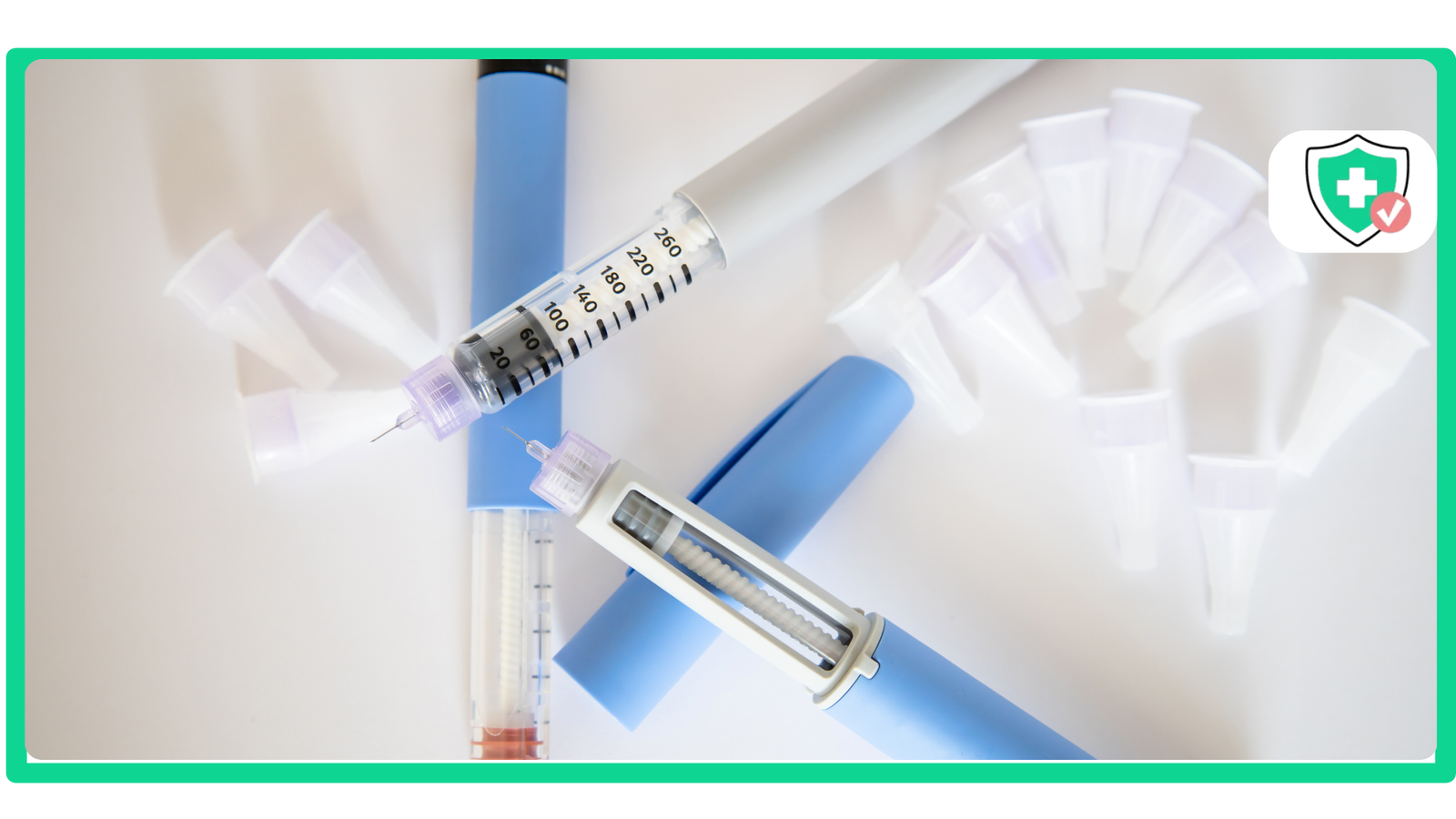


When you are ready to take your first dose of semaglutide, you will have your vial of medicine and a small syringe. Your doctor tells you that your starting dose is 0.25 mg. But when you look at the syringe, you see that it is marked with little lines that are called “units.” This can be very confusing at first! It is normal to feel a little bit unsure. You are holding the medicine and the syringe, and you are asking a very smart and important question: how many units is .25 mg of semaglutide?
The answer is not a single number that is the same for everyone. But don’t worry. We are going to explain why in a very simple and clear way so that you can feel completely confident.
The Difference Between Your Dose (mg) and Your Volume (Units)
The first step is to understand that we are talking about two different kinds of measurements.
Your dose is the amount of the active medicine that your body needs. It is measured in milligrams, which is just “mg” for short. Think of it like a recipe for a cake that tells you to use “1 cup of sugar.” The 1 cup of sugar is your dose.
Your volume is the amount of liquid that you are going to draw into your syringe. The tiny lines on an insulin syringe for semaglutide measure the liquid in “units.” So, the goal is to draw the right amount of liquid (the volume in units) to make sure you get the right amount of medicine (the dose in mg).
The Key Factor: The “Concentration” of Your Medicine
This brings us to the most important part of our answer. The answer to how many units is .25 mg of semaglutide depends completely on one thing. It depends on the “concentration” of the liquid medicine in your specific vial.
That word sounds a little scientific, but it is a very simple idea.
Imagine you have two pitchers of lemonade. One pitcher is made from a frozen can, so it is super-strong and concentrated. The other pitcher has a lot of water mixed in, so it is much more “watered down.”
If you wanted to get the same amount of strong lemonade flavor, you would only need a very small glass from the concentrated pitcher. But you would need a much bigger glass of the watered-down lemonade to get that same amount of flavor.
Your medicine works the exact same way. Compounded semaglutide can be made in different concentrations, or strengths. The concentration of your medicine will be printed on the label of your vial. It will say something like “2.5 mg per mL” or “5 mg per mL.” This just tells you how much medicine (mg) is in a certain amount of liquid (mL).
A safe and legal provider will always make sure this information is clear. Our commitment is to work only with the best U.S. pharmacies that follow these safety rules.
Let’s Look at an Example Calculation (But Don’t Do This Yourself!)
This next part is very important. This is just an example to help you understand the idea. You must NEVER try to do a semaglutide dosage calculation on your own. You should only and always follow the exact instructions that your doctor gives you.
Okay, let’s pretend we have a vial of medicine.
-
On the label, it says the concentration is 2.5 mg per 1 mL.
-
We also need to know that 1 mL of liquid is the same as 100 units on a standard insulin syringe.
-
So, for this pretend vial, we know that 2.5 mg of the medicine is equal to 100 units of liquid.
-
If we need to get a dose of 0.25 mg, we can do some simple math. If 2.5 mg is 100 units, then 0.25 mg would be 10 units.
Now, what if your medicine had a different concentration? If the medicine was more “watered down,” you would need to draw more units into your syringe to get that same 0.25 mg dose. This is why looking at a generic semaglutide units chart online can be very confusing and even dangerous.
Your Doctor’s Instructions Are Law
This brings us to the most important rule of all. It is the one rule you must always follow to stay safe on your health journey. You must never, ever try to guess or calculate your own dose.
When your doctor prescribes your medication, they will give you exact and personalized instructions. They will tell you, “Draw X number of units into your syringe.” That one number is the only number that matters. It is your personal instruction, based on your body, your vial, and your syringe.
Following this one simple rule is the most important part of answering the question, how many units is .25 mg of semaglutide, from a safety point of view. It is the key to your success.
A good medical program is built on safety. You can start a free consultation to get a safe, personalized medical plan.
Our Simple and Safe Approach to Your Treatment
We know that safety and clarity are the most important parts of your treatment. We want you to feel completely confident every time you take your medication.
Our all-inclusive program is $299 per month. This one price covers your ongoing medical supervision, your medication from a licensed U.S. pharmacy with clear and simple dosing instructions, all of the supplies you will need like syringes, and free, discreet home delivery.
We also believe in making it easy for you to ask questions. If you are ever feeling unsure, you can always confirm your dosage with your provider through the Patient Portal.
The Final Answer on Doses and Units
So, let’s bring everything together for a final, simple answer.
The question “how many units is .25 mg of semaglutide” has a very clear answer: It depends on the concentration of the medicine in your vial. There is no one-size-fits-all answer.
That is why you must always ignore any charts or calculators you might find online. The only instruction that matters is the one that comes directly from your doctor. Following your doctor’s instructions on exactly how many units to draw into your syringe is the only way to make sure your treatment is both safe and effective.
If you have any more questions about safety, our friendly team is always here to help. Please contact our friendly team if you have any questions about safety.
Sources and Further Reading:
For readers who wish to learn more from official sources, we recommend the following resources. These are non-competing, authoritative links that provide additional information on medication safety.
- U.S. Food and Drug Administration (FDA) – “Medication Errors Related to Unit of Measure”: https://www.fda.gov/drugs/drug-safety-and-availability/medication-errors-related-covid-19 (Highlights the safety importance of units vs. mg).
- Institute for Safe Medication Practices (ISMP) – “ConsumerMedSafety.org“: https://www.consumermedsafety.org/ (An authoritative source on safe medication use for patients).