
Getting started with a new medicine can feel a little confusing. There are often new words and numbers to understand. When it comes to Semaglutide, you might see both “units” and “mg,” and you might be asking: How many mg is 20 units of semaglutide? It’s a great question!
But here’s the most important thing you need to know right away: there is no single, simple answer to this question. The correct amount of mg depends completely on the strength of your specific medication. This article will teach you how to find the right answer safely.
Your Safety Comes First
Before we even start doing any math, let’s talk about the most important rule. It’s simple: Always follow the dose in milligrams (mg) that your doctor prescribed.
Your doctor carefully figured out the right dose of Semaglutide for your body. Your job isn’t to decide on a dose. Instead, your job is to draw up the correct number of units in your syringe to match what the doctor prescribed in mg. This article is here to help you understand that calculation, not to help you come up with your own dose.
Units vs. Milligrams (mg): What’s the Difference?
To understand why we can’t just say “20 units equals this much mg,” we need to understand the difference between these two measurements. They measure different things.
What is a Milligram (mg)?
A milligram (mg) is a measure of weight. It tells you the actual amount of the real, active medication that you are taking. This is why your doctor will always write your prescription and tell you what dose to take in mg.
What is a “Unit”?
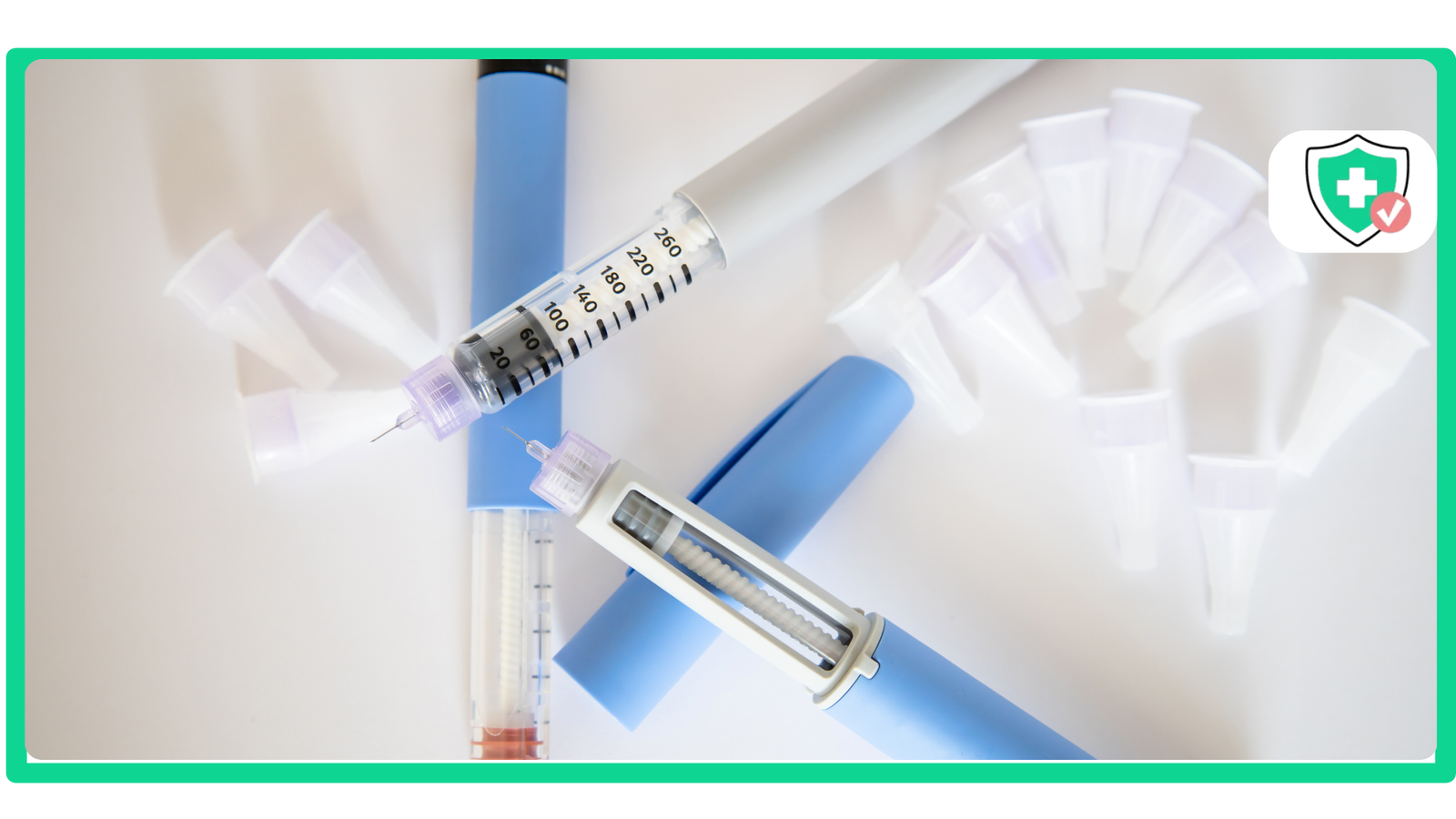
The word “units” is used to measure volume on an insulin syringe. If you look closely at your syringe, you’ll see it has lines with numbers on the side. Those numbers measure “units,” and there are 100 units in every 1 milliliter (mL).
The syringe measures how much space the liquid is taking up. This is why we can’t just change units directly into milligrams. It depends on how much medicine is packed into that space. That’s the source of the confusion. That’s why we need more information.
The Missing Piece of the Puzzle: Your Vial’s Concentration
The key to finding out how to read a semaglutide vial lies in something called the concentration. This tells you how strong your medicine is. It’s usually printed right on the label of your medication vial.
Think of it like orange juice. You can buy regular orange juice, or you can buy a can of frozen orange juice concentrate.
A small glass of orange juice concentrate is much stronger than a small glass of regular orange juice. Your Semaglutide medication is the same. You have to know its strength to know what 20 units truly means. This strength is called the compounded semaglutide concentration.
When you look at your vial, you should see a number like “5 mg/mL” or “2.5 mg/mL.” This means that in every 1 milliliter of liquid, there are either 5 milligrams of Semaglutide or 2.5 milligrams of Semaglutide, respectively.
The Simple Semaglutide Dosage Calculation
Once you know the concentration, you can figure out what 20 units actually means for your medication. There is a simple calculation you can use.
Here is the formula:
Dose (in mg) = (Units / 100) x Concentration (in mg/mL)
Let’s break down this formula with a couple of examples. The secret to doing the semaglutide dosage calculation is taking it step by step.
Example 1: How many mg is 20 units of semaglutide with a 2.5 mg/mL vial?
-
You have a vial that says 2.5 mg/mL.
-
Your doctor told you to inject 20 units.
-
So, Dose (in mg) = (20 units / 100) x 2.5 mg/mL = 0.2 mL x 2.5 mg/mL = 0.5 mg
In this example, 20 units of your Semaglutide equals 0.5 mg.
Example 2: How many mg is 20 units of semaglutide with a 5 mg/mL vial?
-
This time, you have a vial that says 5 mg/mL.
-
Your doctor still told you to inject 20 units.
-
So, Dose (in mg) = (20 units / 100) x 5 mg/mL = 0.2 mL x 5 mg/mL = 1.0 mg
In this case, 20 units of Semaglutide equals 1.0 mg, which is double the amount in the first example!
CRITICAL SAFETY WARNING: As you can see in these two simple examples, the same 20 units can actually be double the dose of medication. This is why you must NEVER assume that you know the strength of your medication. Always double check the label!
The Safest Path: A Doctor-Guided Program
Doing these calculations might feel a little confusing, and mistakes can be dangerous. That’s why a medically supervised program is so important. It provides an important level of safety.
When you work with a doctor in our program, they won’t just send you a vial and leave you to figure it out on your own. They provide you with clear, precise instructions. Our medical team at Semaglutide Medics is committed to your safety and will always make sure you understand your exact dose in mg and how many units to draw up into your syringe.
Imagine you’ve just received your new medication. Instead of having to figure out the math alone, your plan in your personal patient portal clearly states, “Your dose is 0.5 mg. For your 2.5 mg/mL vial, draw up 20 units.” It takes away all the guesswork and keeps you safe.
Our comprehensive program is designed as a complete, worry-free package with a flat rate of $299 per month. This all-inclusive price covers your medical consultations, the prescription medication, and free home delivery, ensuring you get clear instructions and a consistent supply without surprises. We prioritize safety.
Conclusion: So, How Many Mg Is 20 Units of Semaglutide?
Let’s wrap up and answer our main question one last time. The answer to how many mg is 20 units of semaglutide depends entirely on the concentration that is printed on the label of your vial. It could be 0.5 mg, it could be 1.0 mg, or it could be something else entirely.
The key is to check your vial carefully, know the dose in mg that was prescribed by your doctor, and when in doubt, always ask your provider for help. Your safety is the top priority.
By taking these simple steps, you can take control of your health in a safe and informed way. If you have any dosing questions or just want to learn more about our safe and effective program, contact our expert care team today.
Sources:
-
U.S. Food & Drug Administration (FDA) – Tips for Taking Medicines Safely
-
United States Pharmacopeia (USP) – Compounding and Patient Safety
-
National Institutes of Health (NIH) – Talking with Your Doctor and Pharmacist